
Cleburne County Civil Docket Searches
The state's Search ARCourts information page is the first stop for an online docket search. From there, open the public case search. A person can be located by first, middle, and last name. An organization goes through the organization or case-description field. An exact case number beats every other key. Filters may narrow results to Cleburne County, the filing court, category, or status. Controls can change during the portal transition, so stay flexible.
Search ARCourts is not the only channel. The Cleburne County Circuit Clerk holds the circuit civil files. Visit 301 West Main Street in Heber Springs. Call 501-362-8149, fax 501-362-4681, or email recorder@cleburnecircuitclerkar.gov. Office hours run weekdays from 8:30 a.m. to 4:30 p.m. Arrange mail requests with the clerk first. That way the document, fee, payment, and return method are settled up front. Cleburne County small claims and district civil records stay with the department that filed them. The county posts no public terminal at its counters.
- Decide whether the matter is a circuit civil case or a limited-jurisdiction district case.
- Search the exact case number. If it is unknown, try a participant or organization name.
- Confirm Cleburne County, the court, case description, party roles, and assigned judge.
- Read filings from the complaint through service, answers, motions, orders, settings, and judgment.
- Ask the holding clerk for a missing document, a current hearing check, a plain copy, or a certified copy.
Two Cleburne Civil Docket Levels
Cleburne County Circuit Court takes the big civil work. Probate and other general-jurisdiction matters land there too. Heather Smith's Circuit Clerk office maintains those court filings, even though four judicial divisions split the load across the Sixteenth Judicial Circuit. The District Court is the other level. Its Heber Springs, Greers Ferry, Concord, and Quitman departments handle small claims and civil matters within statutory limits. The local plan prints no current dollar limit. So never guess jurisdiction from an amount alone.
| Level | Cleburne civil docket role | Custodian |
|---|---|---|
| Circuit Court | Major civil, domestic relations, probate, protective matters, and other general jurisdiction | Cleburne County Circuit Clerk |
| District Court | Small claims and civil matters within district jurisdiction | Clerk of the filing department |
| Referred matter | Certain matters may be referred by consent when law and the current plan allow | Confirm from the referral order and current docket |
The administrative plan allows some referrals by consent. Circuit civil, domestic-relations, probate, protective-order, and possession-related matters can move to district court where authorized. That permission is never automatic for a whole category. Rely on the actual referral order and the current case record instead.
Civil Dockets: What They Show
A Cleburne County civil docket lists the court, the case number, the case description, the assigned judge, and the public party roles. The event list tells the story. Filings appear one by one. You see the complaint or petition, summons, service, answer, motion, notice, hearing, order, trial, judgment, post-judgment request, and appeal. Search ARCourts also displays Cleburne County future events and judgments. Some entries link to a public document. Others stop at the index. There, the filing title and date are the keys for a Cleburne County clerk request.
| Case number | The exact court identifier. Preserve the local sequence rather than inventing a format such as year-type-sequence. |
|---|---|
| Parties | Plaintiff and defendant, or petitioner and respondent, where the roles are public. |
| Service | Issuance and later proof of completed service, which are separate events. |
| Motion and order | The request appears as a motion; only a later signed order shows what the judge decided. |
| Future event | The next hearing, conference, trial, or other setting contributed by the court. |
| Judgment | The formal disposition, with the signed document controlling its terms and relief. |
A case description is a category, not a finding. Attorney details can vary, so check contact information on your own. Compare any future event against later continuances and orders before treating it as current.
Cleburne Civil Motions Are Not Orders
A common Cleburne County error treats a filed motion as though the court granted it. It did not. A motion only asks for relief. The civil docket may then show a response, a hearing notice, a minute entry, or a later order. Read far enough forward to find the judge's action. If no public image appears, the filing date and exact order title let the Circuit Clerk or district clerk pull the document.
Service needs the same caution. An issued summons is not completed service. A blank where an answer should be does not establish a default judgment, which comes from a court judgment entered under the applicable process. A listed hearing can also be displaced by a newer order. The event list supplies the trail. The signed filing supplies the legal terms.
The Arkansas Judiciary's forms index helps identify official court materials. A form never substitutes for the docket itself. Browse Arkansas court forms and publications.
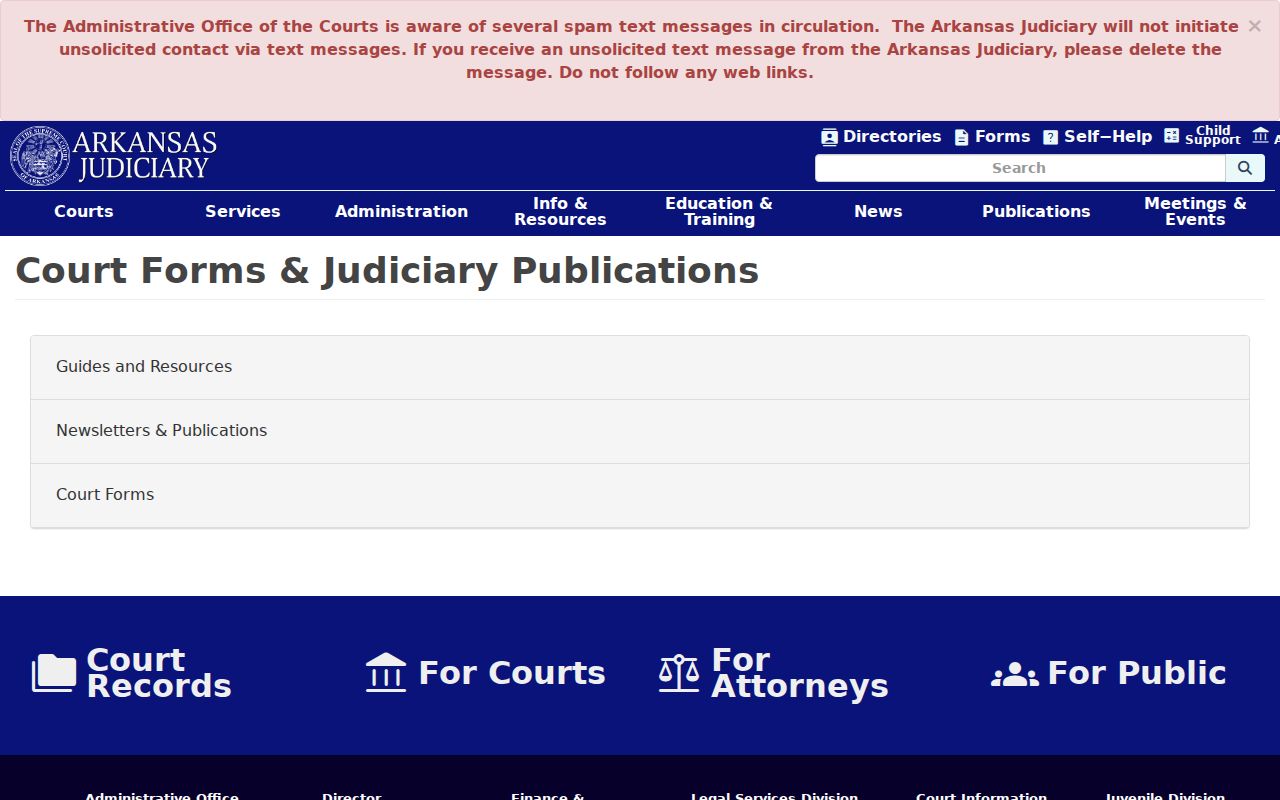
The state's forms library shows what a party may file. The Cleburne civil docket records the resulting court events instead.
What Cases Fill the Civil Docket
Civil dockets in Cleburne County go beyond money disputes. Circuit Court holds substantial civil cases, plus the county's domestic-relations and probate dockets. Small claims live in District Court. So do other civil matters within statutory jurisdiction. The current administrative plan allows authorized consent referrals, which can shift which court handles a proceeding. Trust the filing court shown on the case.
- Circuit civil complaints involving contract, tort, property, or other general-jurisdiction claims.
- Domestic-relations petitions and orders where the material is open to public access.
- Probate proceedings and related filings that are not sealed or otherwise protected.
- District civil cases and small claims filed in one of the four Cleburne departments.
- Authorized referred matters, when a consent referral and court order place them on a district docket.
Family and juvenile material can be restricted. That holds even when the case type looks familiar. Never use search results to infer what a sealed, redacted, or missing record contains.
Cleburne Civil Outcomes Need Context
Read a Cleburne County judgment entry beside the signed judgment itself. That document carries the real details. You get the relief granted, any dollar amount, and which claims survive. A default judgment means the court gave relief. One side never answered or showed up. A nonsuit or voluntary dismissal shows the plaintiff walked away under the procedural rules. A case may sit idle too long. The court can then dismiss it for failure to prosecute. An agreed or consent order simply records terms the court has accepted.
- Default judgment
- A judgment entered after a required response or appearance did not occur, subject to court procedure.
- Nonsuit
- A plaintiff's voluntary end to a civil claim under applicable rules.
- With prejudice
- A dismissal term that affects whether the same claim can be filed again.
- Post-judgment
- Later activity such as a writ, satisfaction, garnishment, or appeal after judgment.
Two words change everything in a dismissal. "With prejudice" and "without prejudice" must stay in your summary. They control whether the claim can come back. Appeals and transfers add their own wrinkle: a second case number may follow. If the notice lists both numbers, run a docket search on each one.
Hearings on the Civil Docket
A Cleburne County civil setting can surface in several places. Check the Search ARCourts future-events block. A local annual calendar link, the assigned judge's working calendar, or the clerk's record can help too. Begin with the newest case event, then confirm through the Cleburne County Court Schedule chain. One caution: a calendar may not name every case. It can list a court day, and the portal may keep an old date even after a reset.
For a circuit hearing coming up soon, call the assigned division. District civil and small-claims settings belong to the department that filed the case. Ask for the date, time, setting type, judge, and exact place. A continuance only moves the event through later court action. It never erases the older entry. Trust a cancellation from a signed order or direct court instruction. Silence on one portal screen is not enough.
Note: A filed scheduling motion is just a request. The Cleburne County civil hearing moves only when the court acts.
Cleburne Civil Judgments Without Image Links
Seeing a civil docket entry is not the same as getting the filing. Search ARCourts includes document links for some public records. Availability depends on the court and its access rules. When a judgment, order, or motion is index-only, write down the case number, court, filing date, and exact title. Those details let the Circuit Clerk pull a circuit document, and a district clerk can do the same for a department file.
One case calls for the local custodian. The AOC's compiled-information system fills a different need entirely. It can demand a detailed request plus, depending on the product, an affidavit, license, or performance bond. Treat it as a bulk tool, not a shortcut for one judgment. The official AOC data-request page draws the line between local case copies and compiled information. Review Arkansas AOC data-request options there.
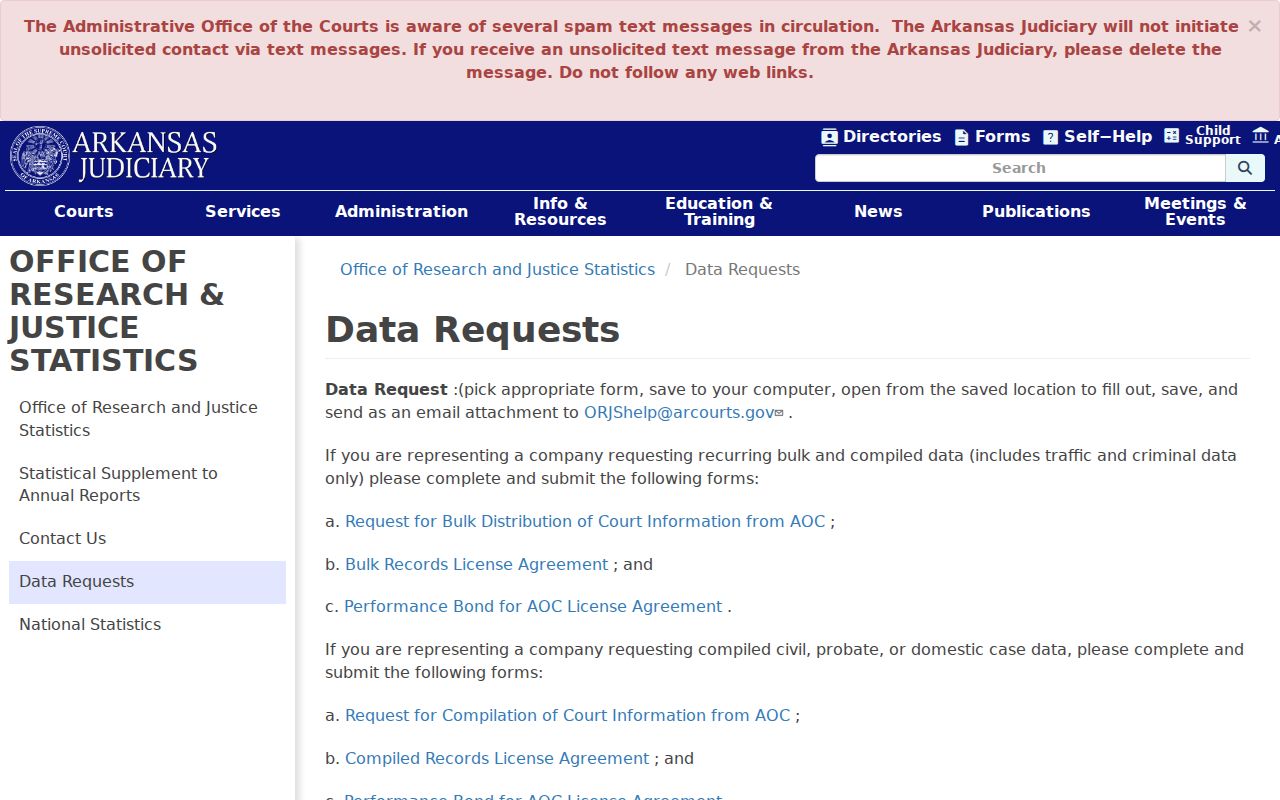
Those options describe data products. A missing Cleburne civil judgment should be requested first from its court custodian.
Cleburne Civil Data Requests Differ
The AOC compiled-information web form wants plenty of detail. Expect to give requester contact information, an organization if one applies, and a thorough description of the compilation. Also state whether naming specific individuals is essential. Administrative Order 19 governs that statewide process. It stands apart from the ordinary route of inspecting one Cleburne County civil docket or ordering one clerk copy. The official compiled request form, at the compiled-information request form, makes that broader scope visible.
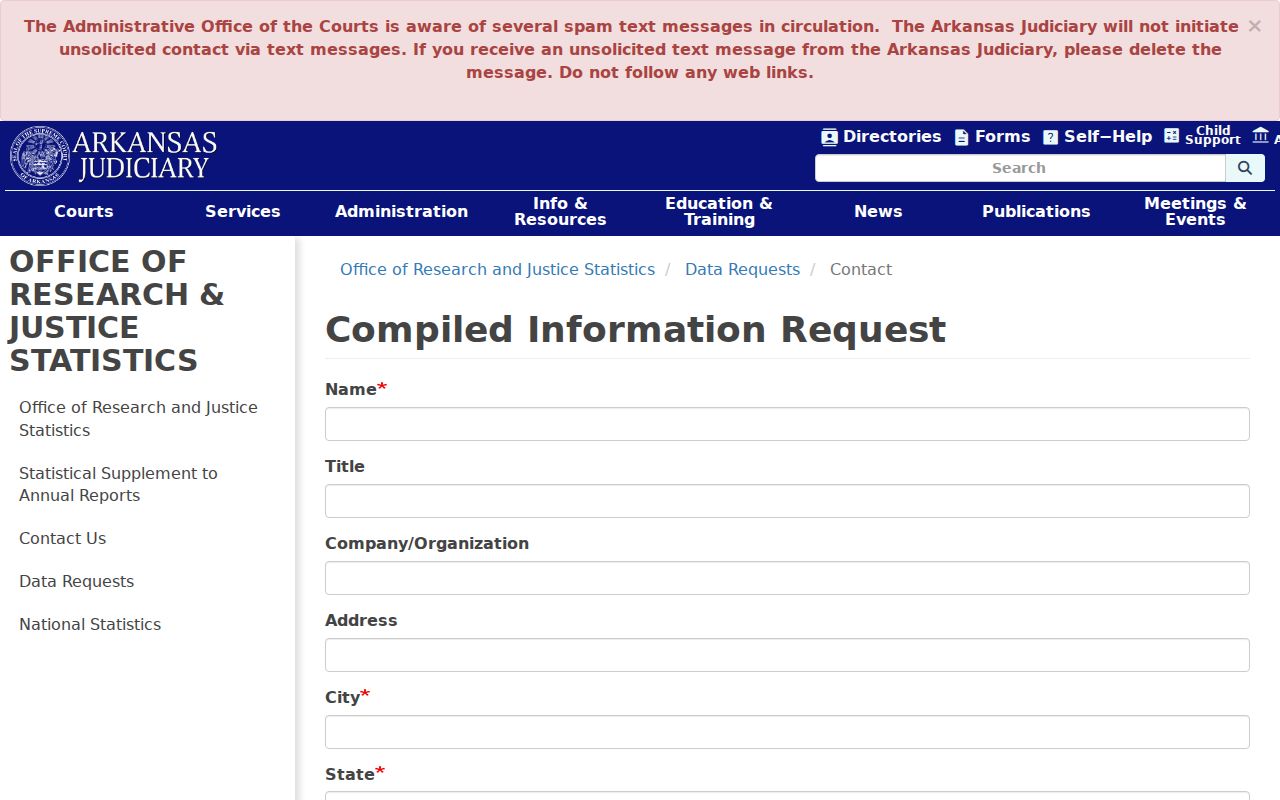
The form image helps separate a statewide compilation request from a direct Cleburne County civil file request.
For a mailed local request, call first. Have ready the case number, court or department, document title and date, plain or certified copy, the number of copies, and your delivery method. The local courts publish no court-copy fee table. Never send a guessed amount, and never substitute a recorder fee.
Who Can See Civil Dockets
Access to Cleburne County civil court dockets runs chiefly through Arkansas Supreme Court Administrative Order 19. That order makes public case information generally available. It applies subject to categorical exclusions, redaction, confidentiality law, and court orders. Administrative Order 19.1 handles protected information in the public copy. Administrative Order 25 adds confidentiality duties for court staff working in AOC systems. The Arkansas Freedom of Information Act covers public records broadly. Judicial case records, though, are administered mainly through Supreme Court authority and the court custodian.
Key access boundaries:
Administrative Order 19 permits public access while withholding protected identifiers and material confidential by law or order.
Administrative Order 19.1 resources explain why the public version must be redacted when protected data is present.
Arkansas Code section 9-27-309 places confidentiality limits on juvenile records.
Juvenile, adoption, and family material stays protected. It will not surface in an ordinary remote search. A public case can still show index-only entries instead of PDFs, and no request can unseal sealed content. Before asking the clerk whether a known matter is offline, archived, redacted, or restricted, verify the spelling, case number, court level, and department. The General Assembly portal, reachable at the Arkansas General Assembly code portal, supplies the official route to current Arkansas statutes.
The official law portal supports careful review of the statutes that shape access to Cleburne County civil records.